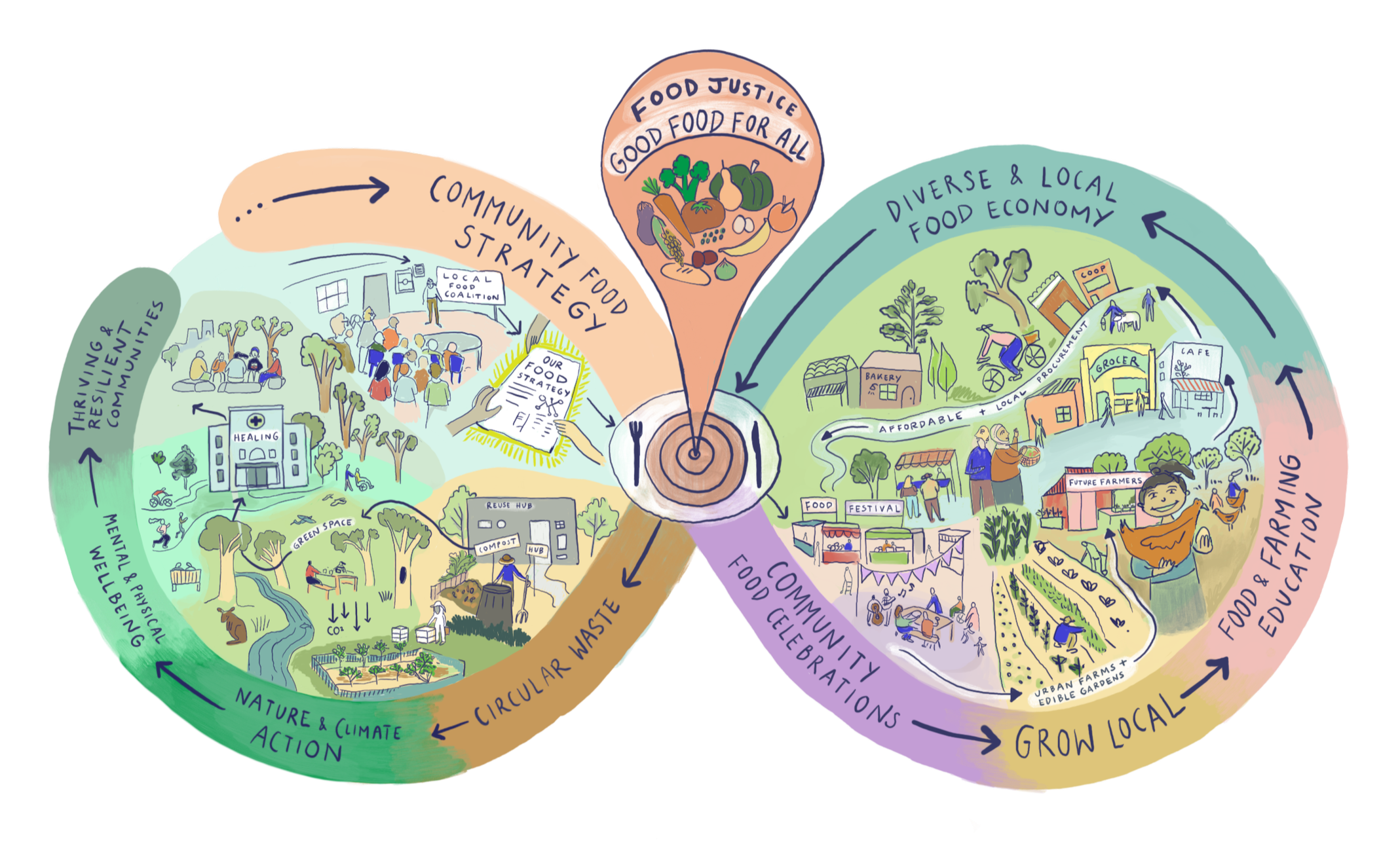
Visual Mapping
Visual mapping is emerging as an excellent tool to help individuals and groups navigate and communicate the complexity of their work. As we work together to create a visual map of your system or change process, we learn more about the work you are doing. Visual mapping both reveals and enables sense-making to occur and be communicated more broadly to others. I have worked with a range of people to visually map complex ideas and process – from system change practitioners to a buddhist teacher.
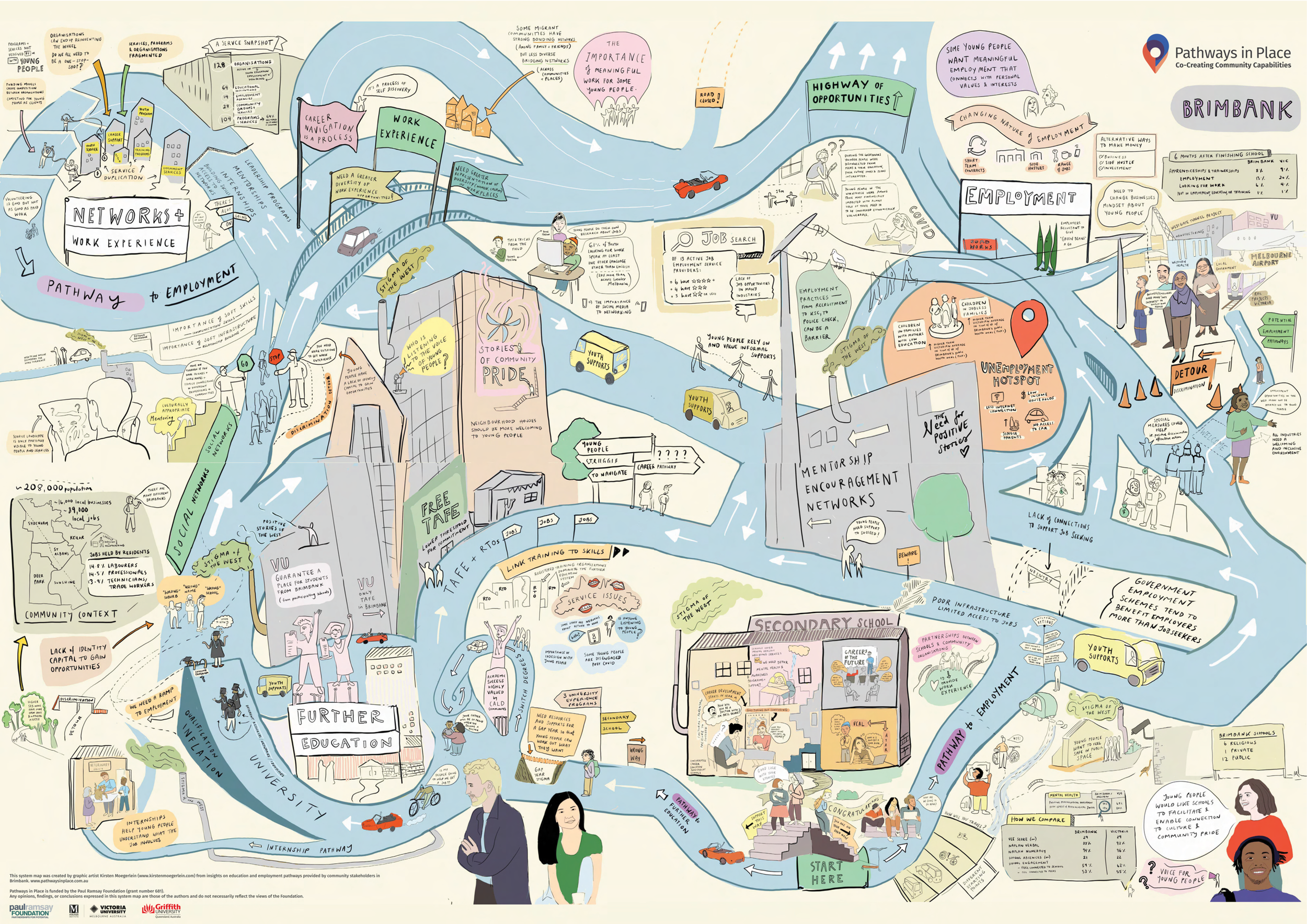
Pathways in place
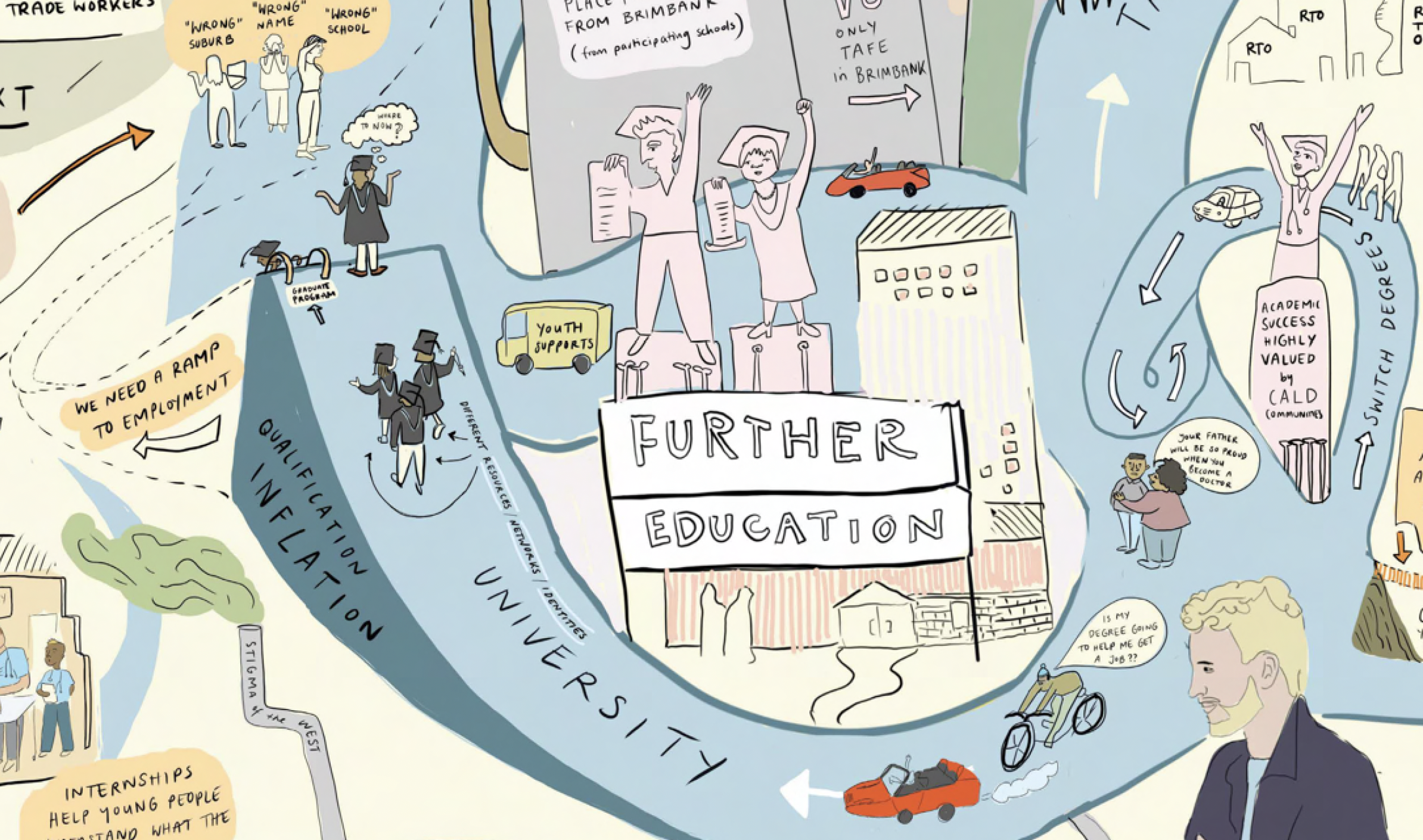
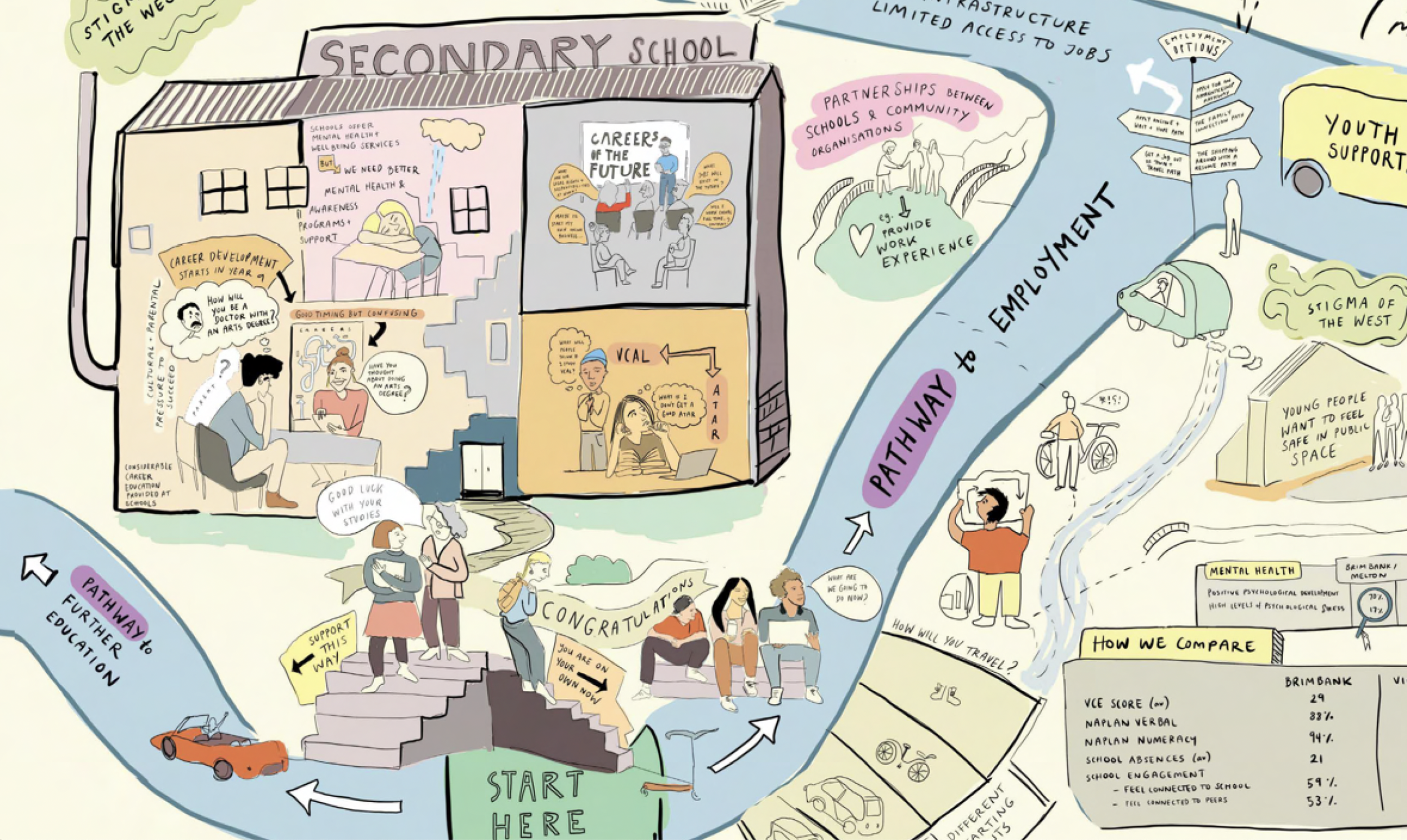
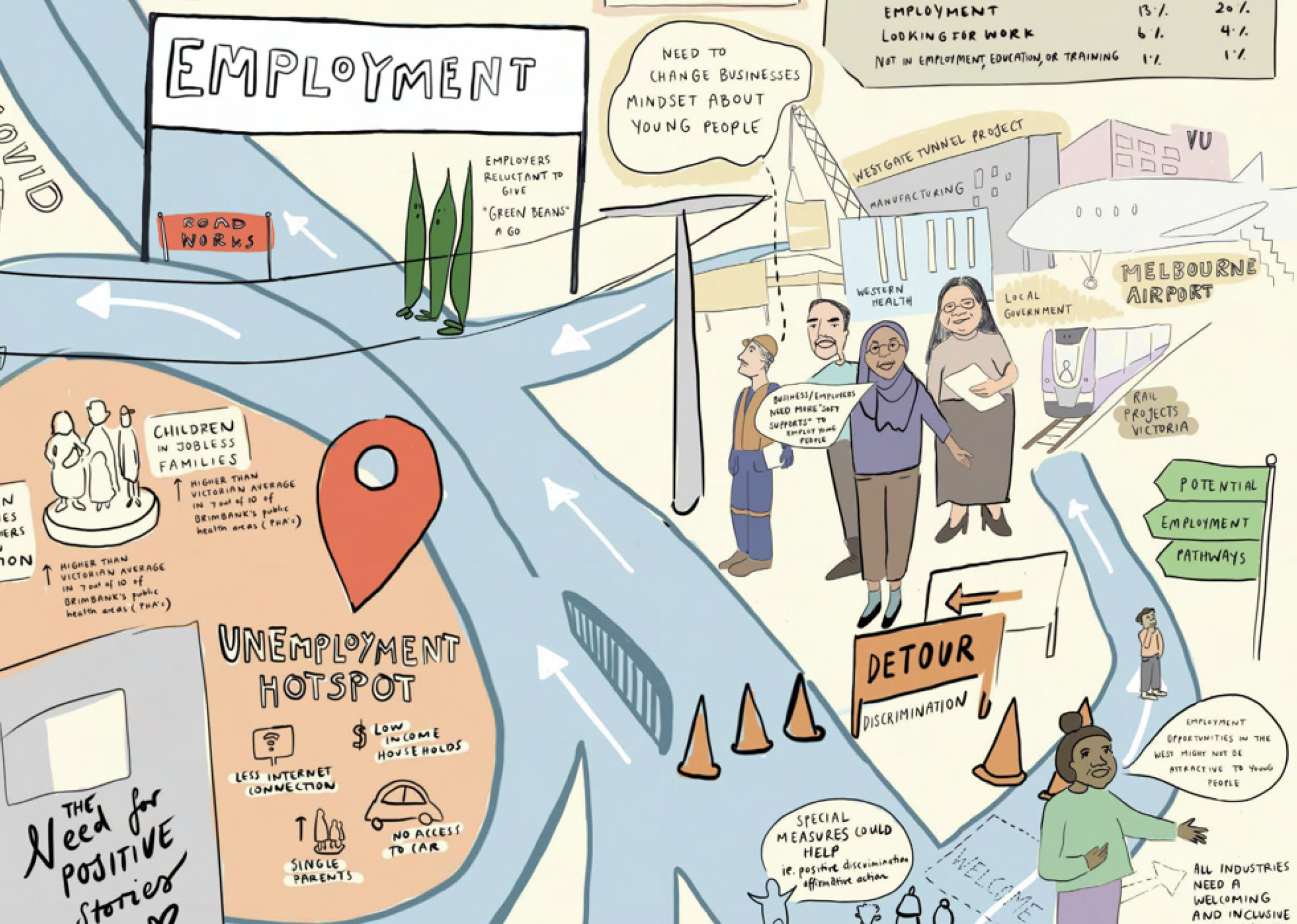
This system map was developed in collaboration with researchers at Victoria University. It was used by the research team to engage community organisations and members in defining the specific problem surrounding youth employment pathways that they wanted to work on together.
During the engagement workshops, researchers took people through a tour of a less complete map (than pictured here) over time more information was gathered by people ‘in’ the system.
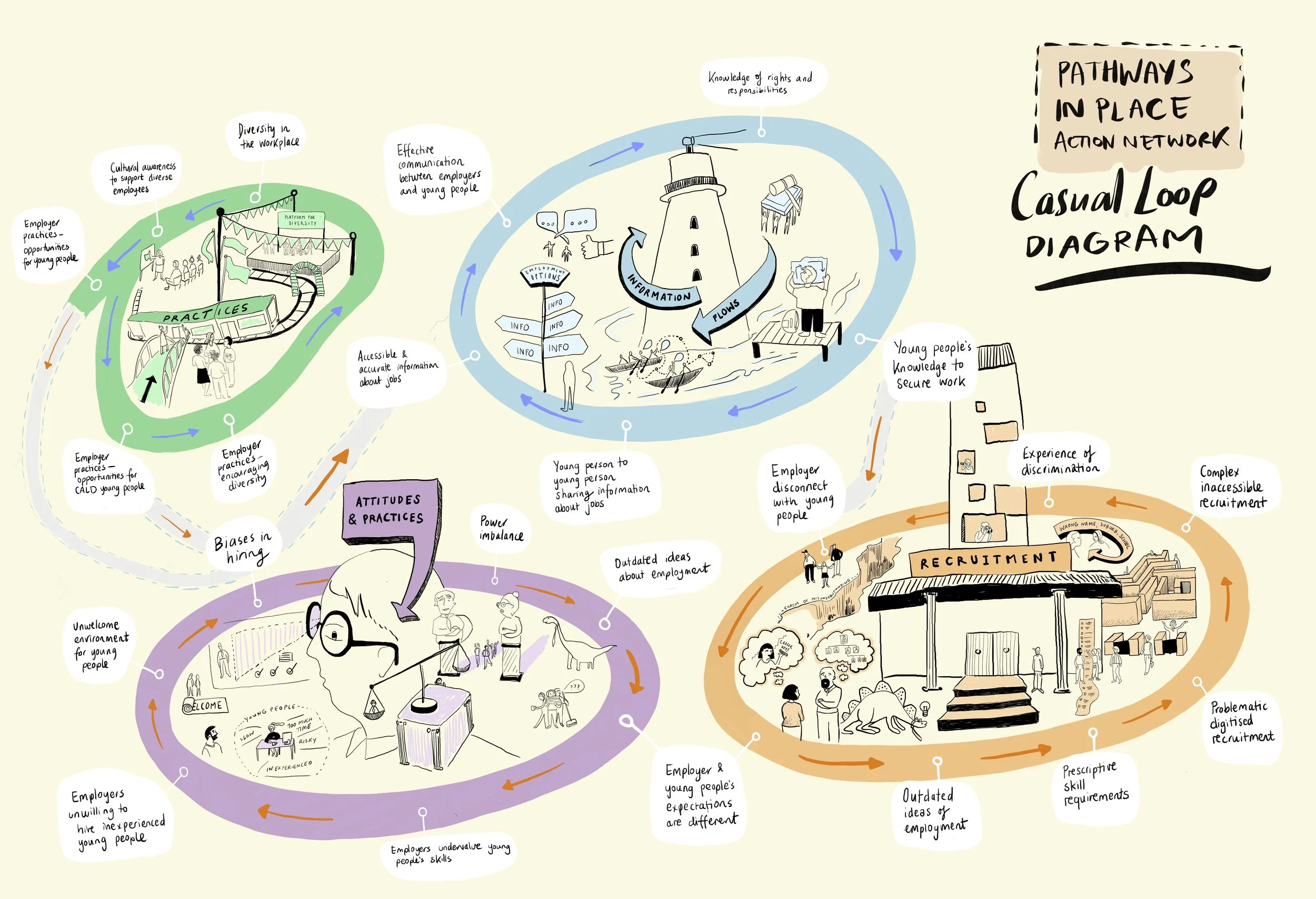
This casual loop diagram helped the action network, refine and sustain their focus within their system change work.
Beds of the Future
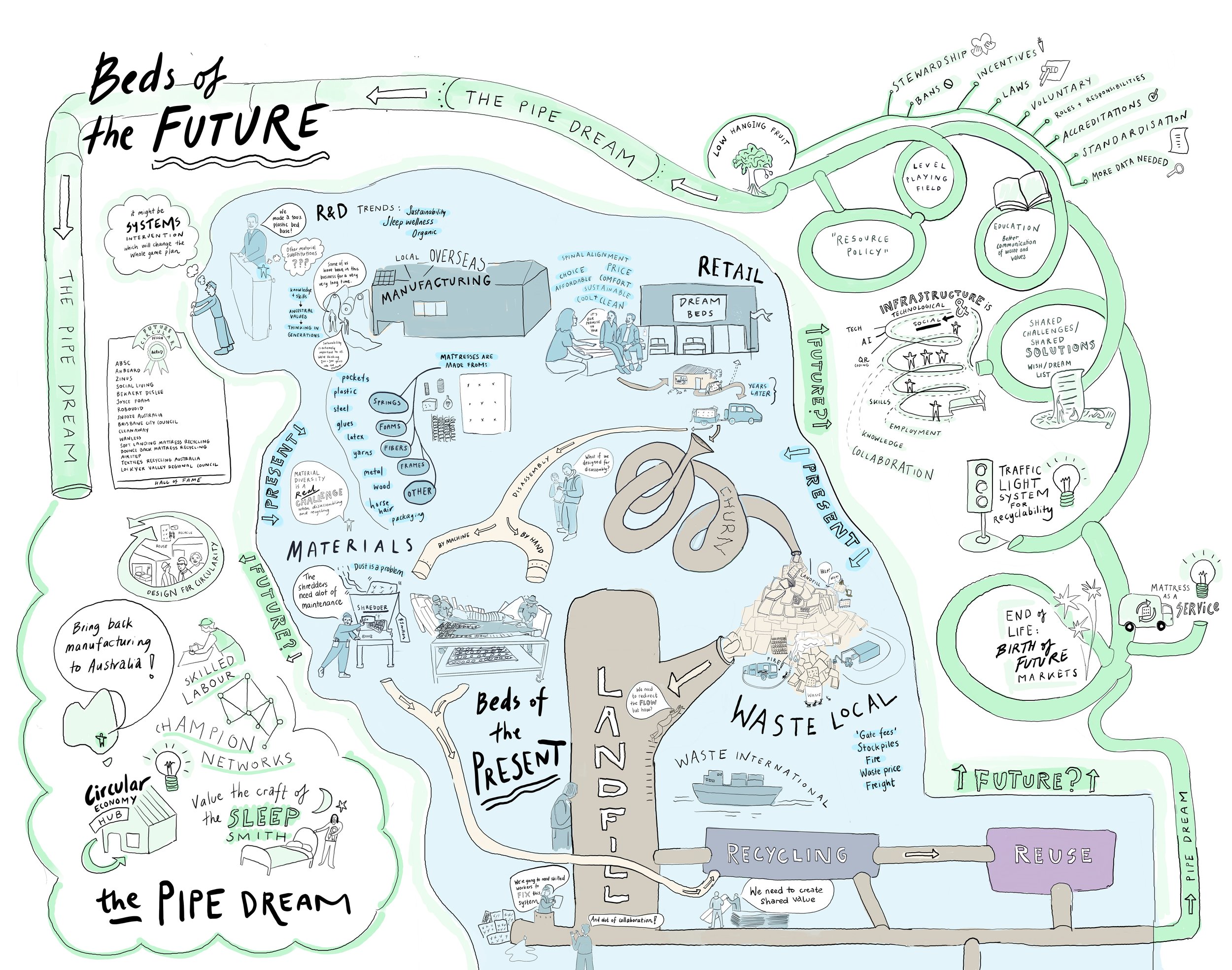
Illustrated system map of the challenges and opportunities affecting stakeholders involved in the manufacturing, sale and recyling / disposal of mattresses.
This map was used in a stakeholder workshop to explore potential areas for collaboration.

PhD Research
Illustrated map of existing and emerging design disciplines created while undertaking a doctorate at RMIT.
The height of the trees indicates the age of the discourse. The breadth of the tree canopy indicates influence. The roots indicate ideology, and connections between emerging domains.

WA Primary Health Alliance
WA Primary Health Alliance (WAPHA) wanted to stop and review the work they had been doing over the past 3 years, in order to see what they had done and where they were going. Through the visual mapping process they were able to refine and remember their roles and find clarity. I took disparate information and mapped it in a way that made sense and helped WAPHA to begin the process of refining what they wanted to say. The visual mapping process helped WAPHA to think and see the project more clearly, to understand where they have been, where they are going and the role they play in the bigger picture.

Visual mapping for a strategy workshop
Three horizons map for a strategy workshop focused on anticipating the way that present trends will affect the long-term economic horizon. This client is situated within the emerging regenerative economy.

The Australian Prevention Partnerships Centre
The Australian Prevention Partnerships Centre (TAPPS) needed a way to visually communicate the ‘deep dive’ of doing systems change work with researchers and partners. I worked with Dr Therese Riley on this process map to highlight the different roles that people play in system change work, including at what ‘depth’ they engage in the work. Therese is an amazing visual thinker. She imagined an ecology of under water sea creatures, and I went to work! We were all very happy with how this map was able to communicate the complexity of the Prevention Tracker program, but was still accessible to others.

Pocket Guide to Systems Wayfinding
Systems work is complex and hard to communicate. This pocket guide stems from research insights generated by a community of system practitioners. In collaboration with Seanna Davidson, I worked to develop a visual landscape that could communicate the journey of doing systems work.

A Whole Community Approach to Partnering
Southwest Primary Care Partnership wanted to communicate the systemic approach that they take when partnering to improve health determinants in their region. We used different metaphors to communicate their role as a nurturer, broker and guide within the ecosystem of services and community organisations that they work with. I worked with Seanna Davidson (The Systems School) to draw out and reveal their systems change practice, a practice which had been a long, challenging and rewarding journey. This illustration was created to generate a deeper understanding of their own practice (for themselves) and to communicate what they do to others.
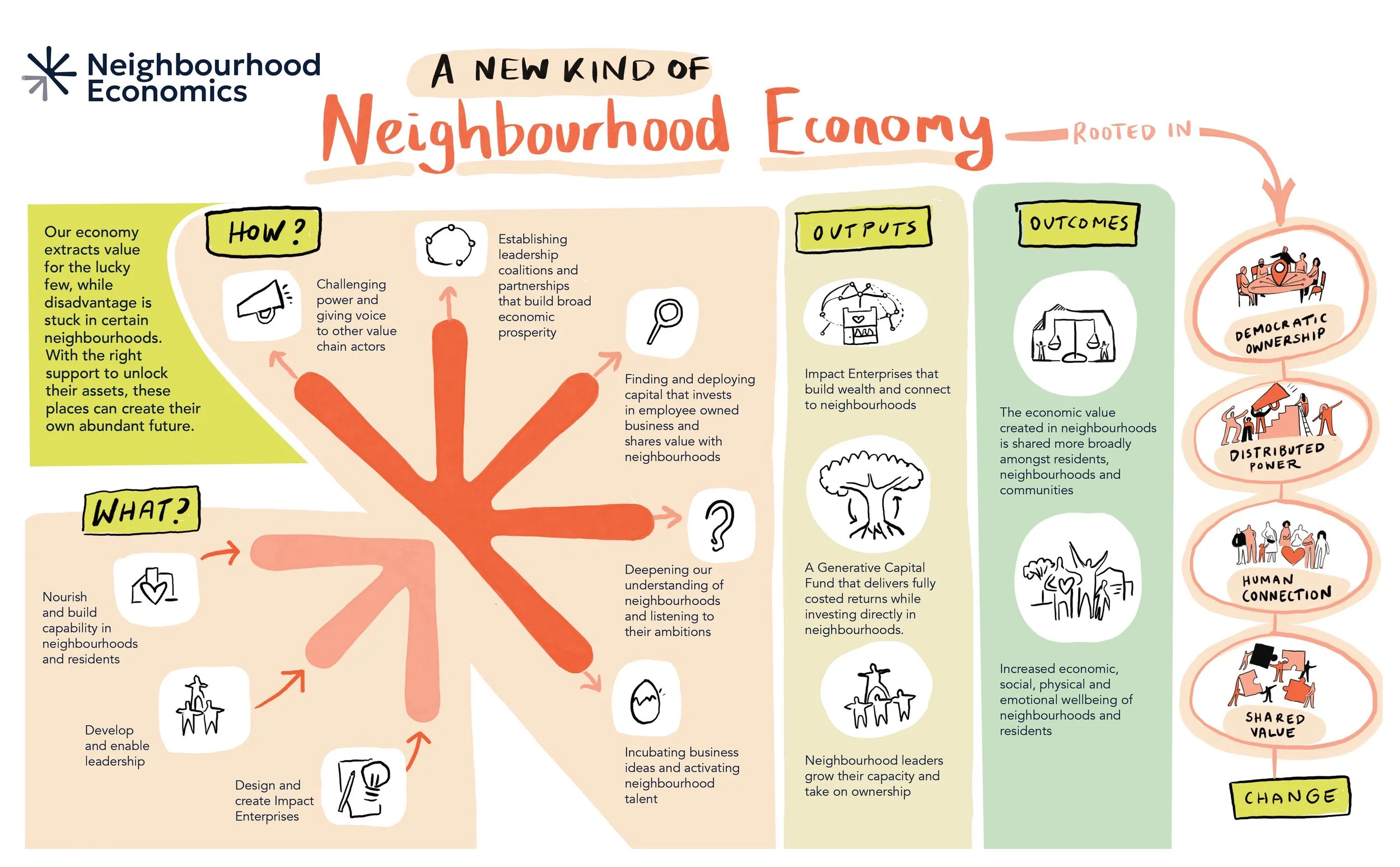
Neighbourhood Economics
Theory of change
Sustain The Australian Food Network